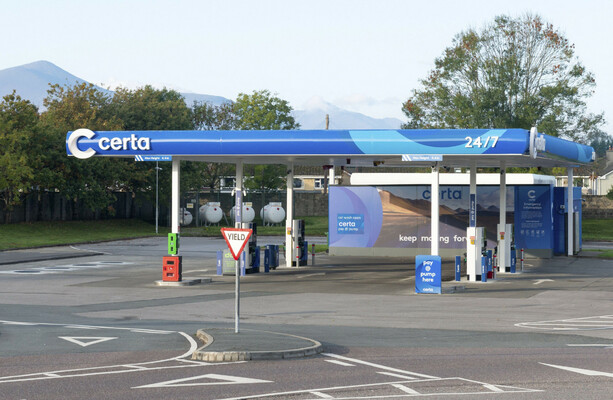
The sale of DCC, Ireland's last major conglomerate, marks the end of an era. This article explores why conglomerates have fallen out of favor and the implications for the future of Irish business.
The recent sale of DCC, one of Ireland's largest and last remaining conglomerates, for nearly €7 billion marks a significant chapter in Irish corporate history. Conglomerates, entities made up of various businesses across different industries, were once a prominent feature of the Irish business landscape. But over the last few decades, they have largely disappeared. This article delves into the reasons behind the decline of conglomerates, why investors have shifted preferences, and what the future holds for such business structures in Ireland.
### The Rise and Fall of Irish Conglomerates
Irish conglomerates like James Crean, IWP International, and Fitzwilton plc were once significant players in the market, investing across various unrelated sectors. However, they have either been sold, broken up, or have gone bust. The primary reason for this trend is the 'conglomerate discount,' where investors value conglomerates at less than the sum of their parts. This discount arises because conglomerates are complex and difficult for investors to assess, leading to a cautious investment approach.
### Investor Preferences and Market Dynamics
In recent years, there has been a marked shift in investor preferences towards specialized companies over conglomerates. Investors perceive conglomerates as challenging to manage due to their involvement in unrelated industries, which complicates efficient capital allocation. This inefficiency often results in underfunding of promising divisions, while less promising ones receive excessive funding.
### DCC's Strategic Shift to Energy
DCC's journey mirrors the broader trend of conglomerates narrowing their focus. Originally operating in healthcare, technology, and energy, DCC recently divested its healthcare and technology divisions to concentrate solely on energy. This strategic pivot has made DCC more attractive to investors, culminating in its acquisition by a consortium of private equity firms.
### The Future of Conglomerates in Ireland
The sale of DCC signifies the end of the conglomerate era in Ireland. While the formation of new conglomerates is unlikely, it's possible that future Irish companies may grow and diversify. However, these future entities are expected to focus on closely related sectors instead of disparate ones.
### Conclusion
The sale of DCC marks a pivotal moment in Irish business history, emphasizing the shift towards specialization over diversification. As investors continue to favor focused companies, the traditional conglomerate model, as exemplified by DCC, seems to have reached its conclusion in Ireland.
Frequently Asked Questions
What led to the decline of conglomerates in Ireland?
The decline is primarily due to the 'conglomerate discount,' where investors value conglomerates less than their individual parts, and the challenges of managing unrelated business divisions.
Why did DCC sell off its healthcare and technology divisions?
DCC sold these divisions to concentrate on its energy sector, aligning with investor preferences for more focused businesses.
What is a 'conglomerate discount'?
A 'conglomerate discount' occurs when investors value a conglomerate at less than the combined value of its parts, often due to complexity and management challenges.
Are new conglomerates likely to form in Ireland?
It is unlikely due to investor preferences for specialization. Future large companies may diversify but will likely focus on related sectors.
What impact does investor preference have on conglomerates?
Investors prefer specialized companies, seeing them as easier to manage and assess, which has led to a decline in the formation and sustainability of conglomerates.