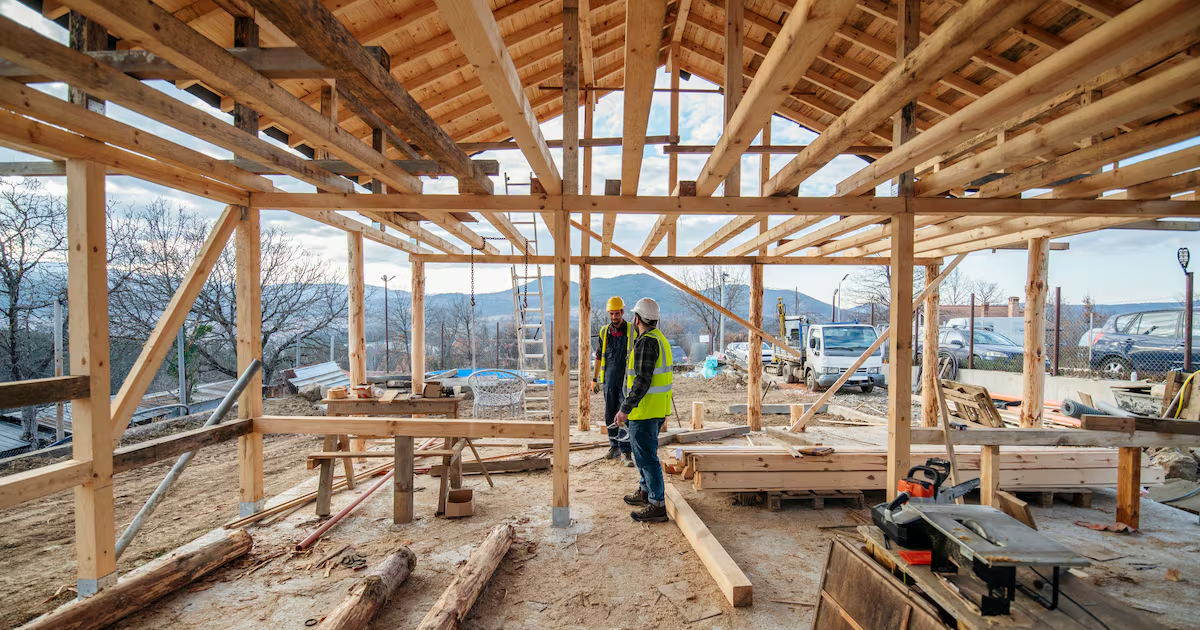
This article examines the prolonged planning process in Ireland and its impact on the housing development sector, highlighting challenges faced by developers and potential solutions.
The housing market in Ireland is facing significant challenges, primarily due to delays in the planning process. According to recent findings by the Central Bank, the average time from planning application to completion of homes has doubled over the past decade. This article delves into the various factors contributing to these delays, the experiences of developers, and the implications for the housing crisis.
### The Current State of Housing Development
The Central Bank's report highlights a stark increase in the time required to complete housing developments, with current projects taking an average of four years from the initial planning application to final completion. This is a significant rise from the 21 to 26 months it took a decade ago. Large-scale residential developments (LRDs) are particularly affected, requiring multiple meetings with local authorities and facing extended timelines if appeals are involved.
### Challenges in the Planning Process
Developers like Vanisland Limited and smaller firms face a cumbersome planning process. Michael Prenty of Ballymore Group notes that even after securing land and designing homes, developers can spend up to two years navigating local authority approvals. A shortage of planners and the transition of experienced personnel to private sectors exacerbate these delays, leaving local authorities overwhelmed.
### Impact on Developers
For developers, these delays translate into increased costs and financial strain. Small firms, like the one led by 'David,' endure prolonged waits and significant interest payments on loans while their projects are stalled. The inefficiency of the planning system, coupled with 'Nimbyism,' or local opposition to development, further complicates and prolongs the process.
### Utility and Infrastructure Challenges
Beyond planning, developers face additional hurdles with utility providers, which can further stall projects. Discrepancies between local councils and service providers like Úisce Éireann can delay essential services such as wastewater management, as experienced by a West Cork developer struggling to complete a project initiated in the 1990s.
### Potential Solutions and Future Outlook
While the government has enacted reforms to streamline the planning process and An Coimisiún Pleanála claims adherence to statutory timelines, developers remain cautious. Better coordination between planning authorities and utility providers, as well as an increase in planning resources, could alleviate some of these challenges. However, without substantial changes, the housing crisis in Ireland is unlikely to see significant improvement.
### Conclusion
The prolonged planning process in Ireland poses a significant challenge to housing development, affecting timelines, costs, and ultimately the availability of new homes. Addressing these delays is crucial for mitigating the housing crisis and ensuring that development meets the demand.
Frequently Asked Questions
What is the average time for housing development completion in Ireland?
As of 2026, the average time from planning application to housing development completion is four years, according to the Central Bank.
What factors contribute to delays in the planning process?
Delays are attributed to a cumbersome planning process, shortage of planners, multiple required meetings with local authorities, and local opposition to developments.
How do planning delays impact developers financially?
Developers face increased costs due to prolonged interest payments on loans, as projects remain stalled during the extended planning process.
What role do utility providers play in delaying housing projects?
Utility providers can delay projects when there are discrepancies between service providers and local councils, affecting essential services like wastewater management.
What measures are being taken to improve the planning process?
The government has implemented reforms to streamline the process, and An Coimisiún Pleanála aims to adhere to statutory timelines, though developers remain cautious about the effectiveness of these measures.